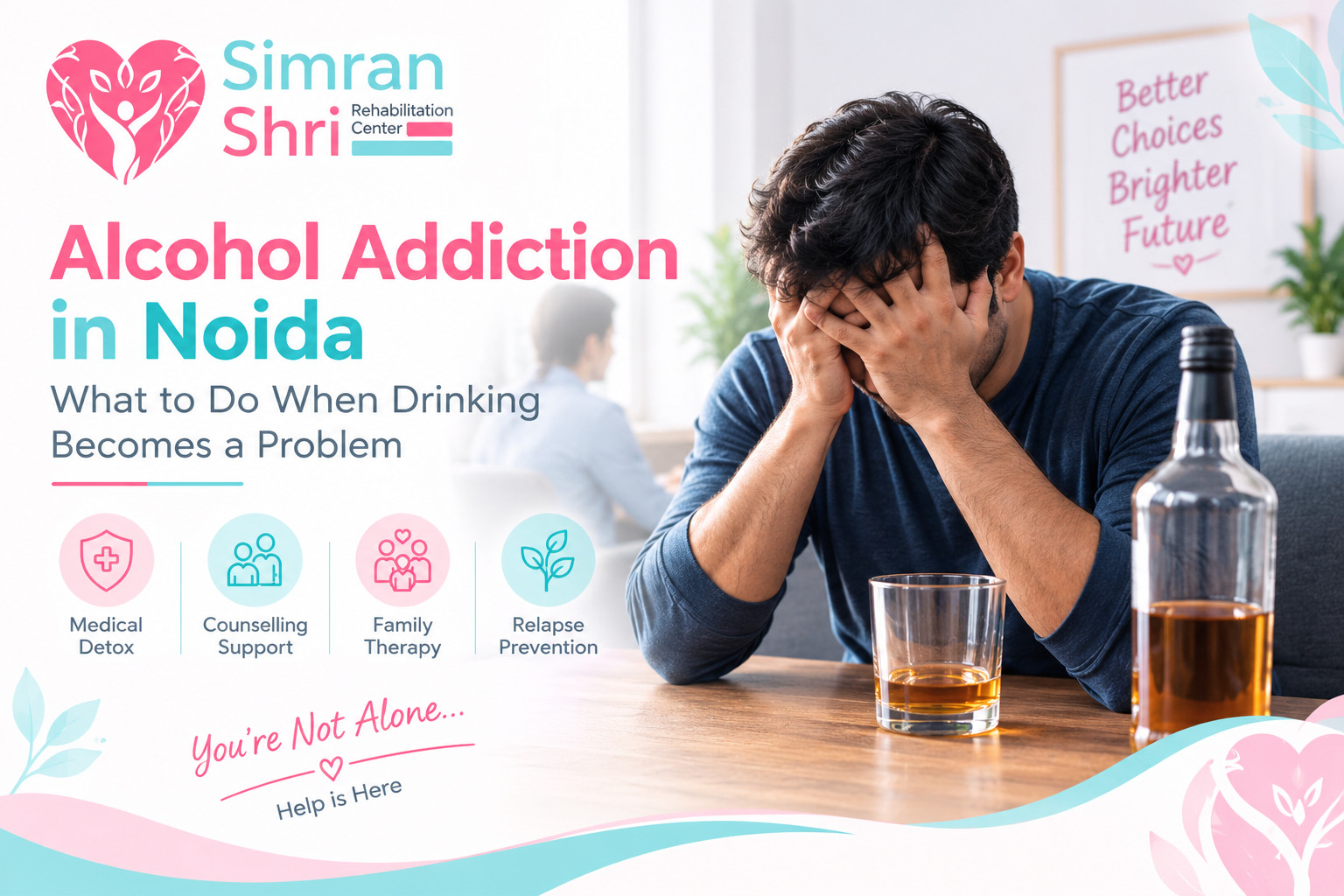
Drinking alcohol may begin as a social habit or a way to cope with stress, but over time, it can become difficult to control. When drinking starts affecting health, family relationships, work, or daily responsibilities, it may be a sign that professional help is needed. Recognising the problem early can make it easier to understand the available treatment options and take the first step towards recovery.
For people and families concerned about Alcohol Addiction in Noida, understanding the warning signs and knowing where to seek support can make a meaningful difference. SimranShri Rehabilitation Centre in Sector 92, Noida, offers addiction-related services, including alcohol addiction treatment, de-addiction counselling, detox and withdrawal management, family therapy, and relapse prevention support.
What Are the Warning Signs of Alcohol Addiction?
Alcohol-related problems do not look the same for everyone. Some people drink frequently, while others may drink less often but struggle to stop once they begin. The important factor is how alcohol affects their health, choices, and everyday life.
Common warning signs include:
- Drinking more alcohol than originally intended.
- Finding it difficult to reduce or stop drinking.
- Feeling a strong urge or craving for alcohol.
- Neglecting family, work, or personal responsibilities.
- Continuing to drink despite health or relationship problems.
- Developing a higher tolerance and needing more alcohol to feel its effects.
- Experiencing symptoms such as shaking, sweating, anxiety, or nausea when alcohol use is reduced.
These signs do not replace a professional diagnosis. However, if several of them are present, arranging an assessment with a qualified healthcare professional is a sensible next step.
Why Does Alcohol Addiction Develop?
Alcohol addiction can develop through a combination of physical, psychological, and social factors. There is rarely one explanation that applies to everyone.
Stress and Emotional Difficulties
Some people use alcohol to manage work pressure, relationship conflicts, loneliness, or difficult emotions. Although drinking may provide temporary relief, it does not resolve the underlying issue and can create additional problems over time.
Changes in the Brain and Body
Repeated alcohol use can affect the brain’s reward and decision-making systems. As dependence develops, a person may find it increasingly difficult to control drinking even when they understand its consequences.
Family History and Environment
Genetics, family history, social surroundings, and exposure to regular drinking can influence a person’s risk. Having these risk factors does not mean someone will necessarily develop an addiction, but they can make awareness and early support especially important.
Understanding these factors helps families respond with patience rather than blame.
What to Do When Drinking Becomes a Problem
Taking action does not require waiting until alcohol has affected every part of life. Small, practical steps can help someone begin seeking appropriate care.
1. Acknowledge the Concern
Start by recognising changes in drinking habits and their effects on daily life. Keeping track of alcohol consumption, cravings, missed responsibilities, and physical symptoms may help during a medical consultation.
2. Speak With a Healthcare Professional
A doctor or qualified addiction specialist can assess drinking patterns, physical health, mental health, and the risk of withdrawal. This assessment helps determine whether outpatient care, structured rehabilitation, medication, counselling, or a combination of approaches may be appropriate.
3. Avoid Stopping Suddenly Without Medical Advice
People who have developed physical alcohol dependence can experience dangerous withdrawal symptoms when they suddenly stop drinking. Severe withdrawal may involve seizures, confusion, or delirium.
Anyone who drinks heavily or regularly and suspects physical dependence should seek medical advice before stopping. Severe withdrawal symptoms require emergency medical attention.
4. Involve Trusted Family Members
With the person’s consent, family members can help arrange appointments, provide emotional support, and encourage consistency during treatment. Conversations should remain calm and respectful, avoiding threats, shame, or arguments that may discourage someone from seeking help.
Choosing a Rehab Centre in Noida
Finding appropriate treatment is an important decision for both the individual and their family. When comparing a Rehab Centre in Noida, look beyond promotional claims and ask clear questions about the treatment process, clinical supervision, staff qualifications, safety procedures, and follow-up care.
Consider the following points:
- Professional assessment: The centre should explain how individual needs and withdrawal risks are evaluated.
- Qualified professionals: Ask which doctors, psychologists, and counsellors are involved in care.
- Individual treatment plans: Treatment should reflect the person’s health, drinking history, and recovery goals.
- Family involvement: Ask whether family counselling and education are available.
- Safety and hygiene: Check whether the facility maintains clean accommodation, appropriate sanitation, safe surroundings, and responsible healthcare waste-handling procedures.
- Aftercare planning: Recovery support should extend beyond the initial treatment period.
Families should also verify relevant approvals, registration details, and the scope of clinical services rather than relying only on advertising statements.
How Alcohol Rehabilitation Can Support Recovery
Alcohol Rehabilitation can involve several forms of care, depending on the person’s medical condition and individual requirements. Recovery is not simply about avoiding alcohol; it also involves learning healthier ways to manage emotions, rebuild relationships, and handle situations that may trigger drinking.
Detox and Withdrawal Management
Detoxification focuses on helping a person manage the physical effects of stopping alcohol. Depending on the level of dependence, withdrawal may require medical monitoring and prescribed medication. Detox alone does not address every aspect of addiction, so further treatment may be recommended.
Counselling and Psychological Support
Individual counselling can help people understand their drinking patterns, identify triggers, develop coping strategies, and work towards realistic goals. Psychological support may also address stress, anxiety, or other difficulties that contribute to alcohol use.
Family Therapy
Alcohol-related problems often affect partners, children, parents, and other loved ones. Family therapy can improve communication, help establish healthy boundaries, and provide guidance on supporting recovery without encouraging harmful behaviour.
Relapse Prevention and Aftercare
Recovery can involve setbacks, and continued support may reduce the risk of returning to harmful drinking patterns. Aftercare planning may include follow-up counselling, support groups, healthy routines, and strategies for managing high-risk situations.
Alcohol Addiction in Noida: Support at SimranShri Rehabilitation Centre
SimranShri Rehabilitation Centre, located at A-46, Block A, Sector 92, Noida, Uttar Pradesh 201304, provides addiction-related services for individuals and families seeking structured support. The centre states that it has eight years of experience and has supported more than 2,000 families across North India.
Its listed services include alcohol addiction treatment, drug addiction treatment, detox and withdrawal management, de-addiction counselling, family therapy, and relapse prevention and aftercare.
The centre lists Dr. Vikas Singhal as a psychiatrist and Muskaan Trikah as an RCI-registered clinical psychologist, alongside other counselling and mental health professionals. Families should confirm each professional’s current role, availability, and the clinical arrangements applicable to their treatment needs.
If you are exploring a Nasha Mukti Kendra in Noida, ask about the admission process, clinical assessment, treatment schedule, family involvement, and ongoing support before making a decision. You can also ask about fees and what services are included.
For confidential admission enquiries, contact SimranShri Rehabilitation Centre at +91 9958024680 or email help@simranshrirehab.com. You can review the rehabilitation fees and admission process before contacting the centre.
Conclusion
Alcohol addiction can affect physical health, emotional wellbeing, relationships, and everyday responsibilities, but support is available. Recognising the warning signs, seeking medical guidance, and choosing suitable treatment can help individuals take practical steps towards recovery.
For anyone concerned about Alcohol Addiction in Noida, the first step is to speak openly with a qualified healthcare professional and understand which options are appropriate. With individualised care, family support, and a realistic aftercare plan, recovery can become a manageable process rather than something a person has to face alone.
Frequently Asked Questions
1. When should someone seek help for alcohol addiction?
Help should be considered when drinking becomes difficult to control, affects daily responsibilities, causes health or relationship problems, or leads to withdrawal symptoms. A healthcare professional can assess the situation and recommend suitable care.
2. Can alcohol addiction be treated?
Yes. Treatment may include medical care, withdrawal management, counselling, behavioural therapies, family support, and continuing recovery services. The appropriate approach depends on the person’s health and individual circumstances.
3. Is detox enough to recover from alcohol addiction?
Not always. Detox can help manage withdrawal, but it does not necessarily address the psychological, behavioural, and social factors associated with addiction. Ongoing treatment and relapse prevention may also be needed.
4. How can I choose a Nasha Mukti Kendra Near me?
Check the centre’s relevant approvals, professional qualifications, clinical supervision, safety standards, treatment options, fees, and aftercare arrangements. Ask questions directly and confirm that the services match the person’s medical needs.
5. How can I contact SimranShri Rehabilitation Centre in Noida?
You can call +91 9958024680 or email help@simranshrirehab.com for admission enquiries. The centre is located in Sector 92, Noida, Uttar Pradesh.