Completing a rehabilitation programme is an important milestone, but recovery continues long after a person leaves a treatment facility. Returning to everyday life can bring new challenges, including stress, family responsibilities, social pressure, and exposure to old habits. Without a clear plan, these situations may make maintaining progress more difficult.
Relapse Prevention and Aftercare help individuals build healthier routines, recognise potential triggers, and continue receiving support after structured treatment ends. These services are an important part of a long-term recovery plan because they focus on maintaining progress rather than treating rehabilitation as a one-time experience.
At SimranShri Rehabilitation Centre in Noida, recovery is approached as an ongoing process that can include counselling, family involvement, and continued guidance. Understanding how aftercare works can help individuals and families prepare for life after rehabilitation with greater confidence.
What Is Relapse Prevention and Aftercare?
Relapse prevention involves identifying situations, emotions, and behaviours that may increase the risk of returning to alcohol or drug use. Aftercare refers to continued support following a formal treatment programme.
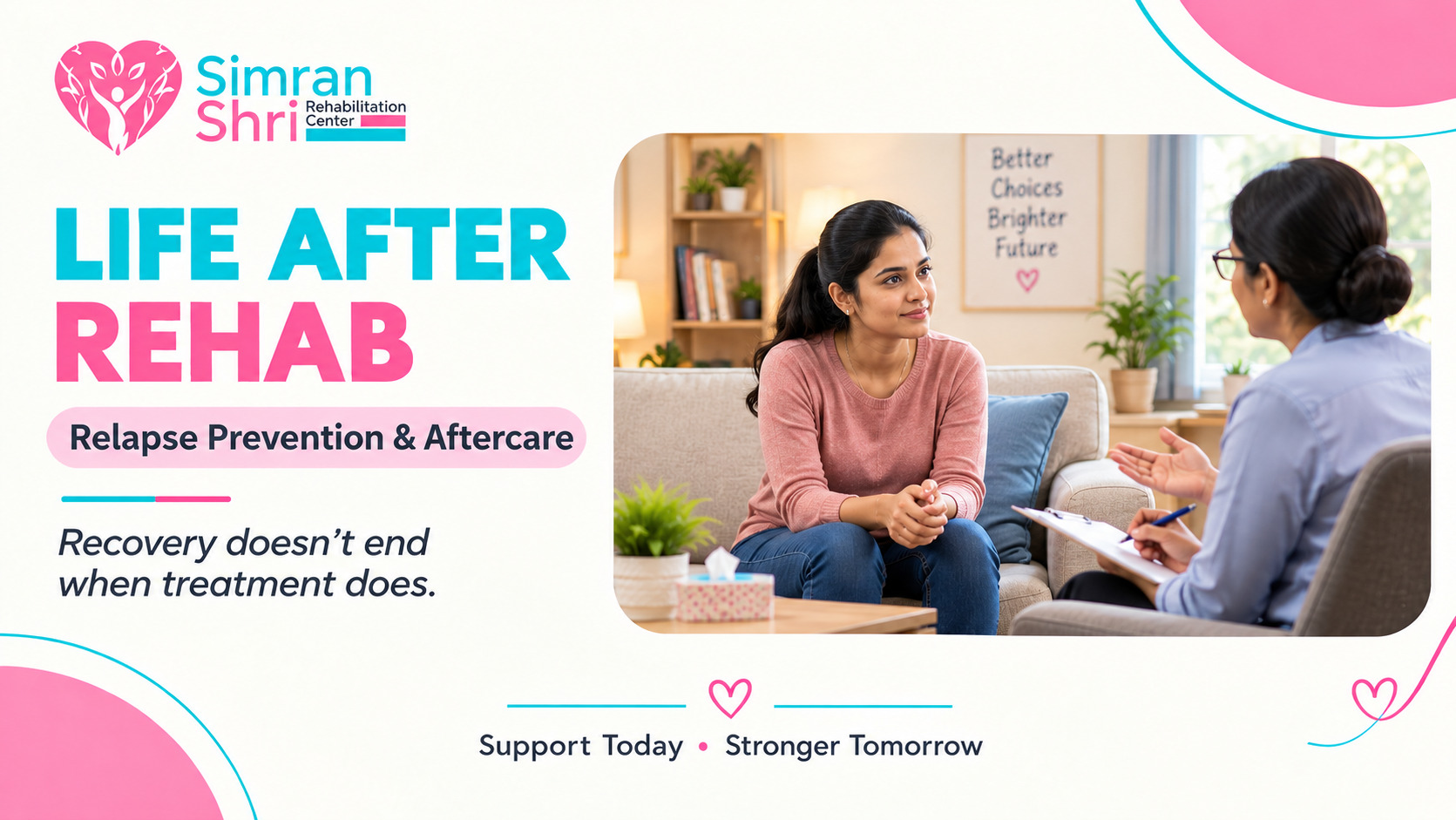
Together, Relapse Prevention and Aftercare help individuals apply what they have learned during treatment to everyday situations. Support may include individual counselling, family sessions, follow-up appointments, peer support, and strategies for managing cravings or emotional difficulties.
The right plan depends on the person’s history, substance use, mental health needs, recovery goals, and available support system. There is no single approach that works for everyone.
Why Recovery Support Matters After Rehabilitation
Leaving a structured treatment environment can mean adjusting to greater independence. Everyday responsibilities and familiar surroundings may introduce challenges that were easier to manage during treatment.
A well-planned Relapse Prevention and Aftercare programme can help individuals prepare for these changes.
1. Recognising Personal Triggers
Triggers differ from person to person. They may include work pressure, loneliness, relationship conflicts, particular social situations, or contact with people associated with previous substance use.
Recognising these patterns early makes it easier to respond constructively. Individuals can learn to pause, contact a trusted person, leave a risky situation, or use coping strategies discussed during counselling.
2. Managing Cravings and Emotions
Cravings and difficult emotions can arise during recovery. Counselling can help people understand these experiences without responding to them through substance use.
Relapse Prevention and Aftercare may include relaxation techniques, problem-solving exercises, emotional regulation, and planning for high-risk situations. Persistent anxiety, depression, sleep problems, or strong cravings should also be discussed with an appropriate healthcare professional.
3. Building Healthy Daily Habits
Consistent routines can provide structure during recovery. Regular meals, sufficient sleep, physical activity suited to individual health, meaningful work, and enjoyable hobbies can support overall wellbeing.
These habits do not replace professional treatment, but they can help create a more stable lifestyle.
How to Create an Effective Aftercare Plan
An aftercare plan should be practical, personalised, and reviewed as circumstances change.
Continue Professional Counselling
Regular counselling can help individuals discuss setbacks, manage stress, and work through concerns before they become overwhelming. De-Addiction Counselling may also help people strengthen decision-making skills and develop healthier responses to difficult situations.
At SimranShri Rehabilitation Centre, counselling and recovery guidance form part of the centre’s service offering. The frequency and type of follow-up support should be discussed with the treatment team according to individual needs.
Stay Connected With Supportive People
Family members and trusted friends can offer encouragement, but they also need clear guidance about how to help. Open communication, realistic expectations, and respectful boundaries can reduce unnecessary conflict.
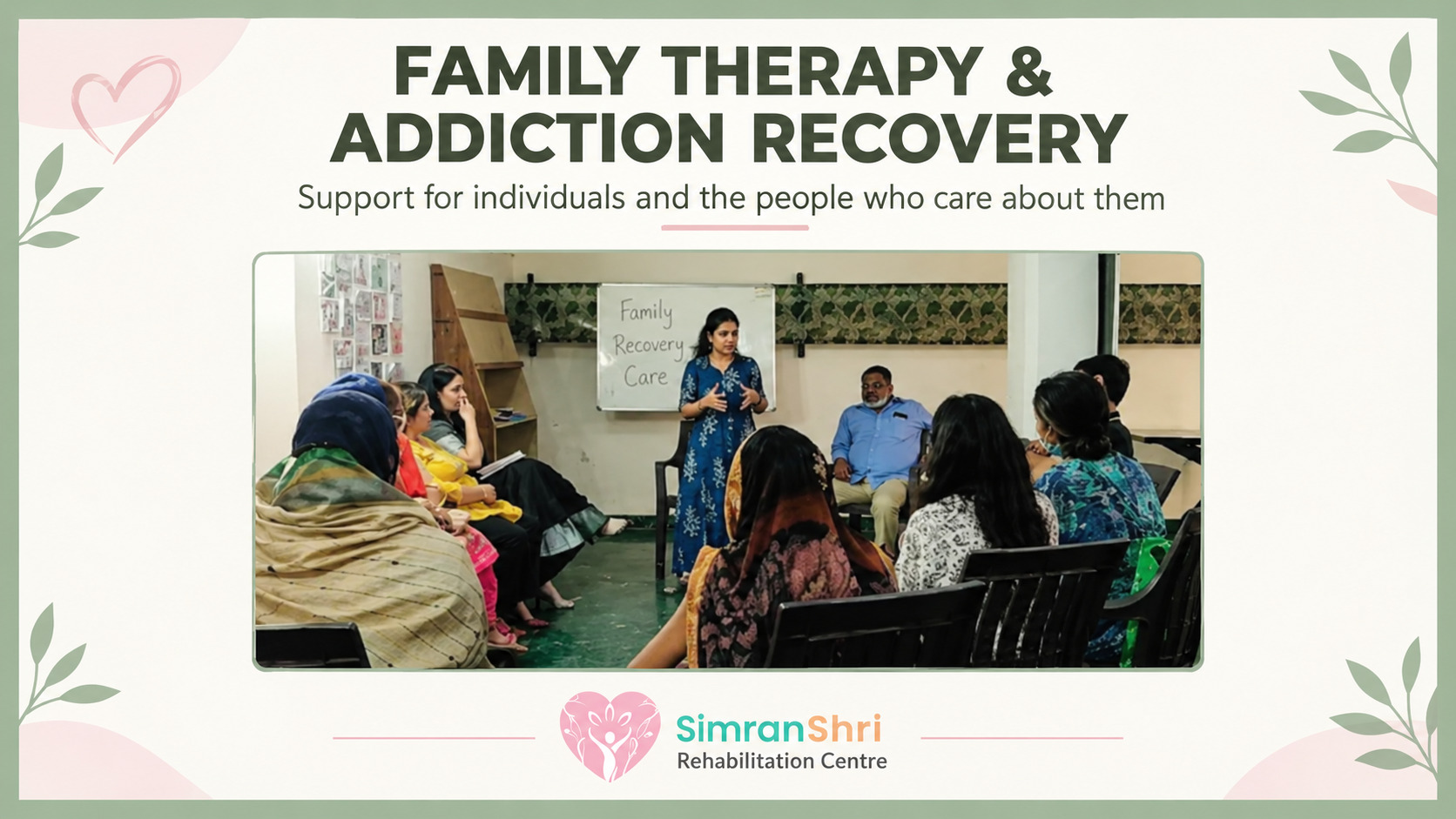
Family therapy may help relatives understand addiction, rebuild trust, and identify ways to support recovery without blame or constant monitoring.
Prepare for High-Risk Situations
A written plan can make difficult moments easier to manage. It may identify personal triggers, early warning signs, supportive contacts, and steps to take when cravings become difficult to control.
Effective Relapse Prevention and Aftercare also includes knowing when to seek professional help rather than attempting to manage every challenge alone.
The Role of a Rehabilitation Centre in Long-Term Recovery
Choosing a suitable Rehab Centre involves looking beyond the initial treatment programme. Families should ask whether the provider explains discharge planning, offers appropriate follow-up options, and helps individuals understand the next steps in recovery.
A Rehabilitation Centre should also communicate clearly about its services, staff qualifications, treatment approach, fees, privacy practices, and emergency procedures. Families can ask how clinical concerns are assessed and which professionals are responsible for different aspects of care.
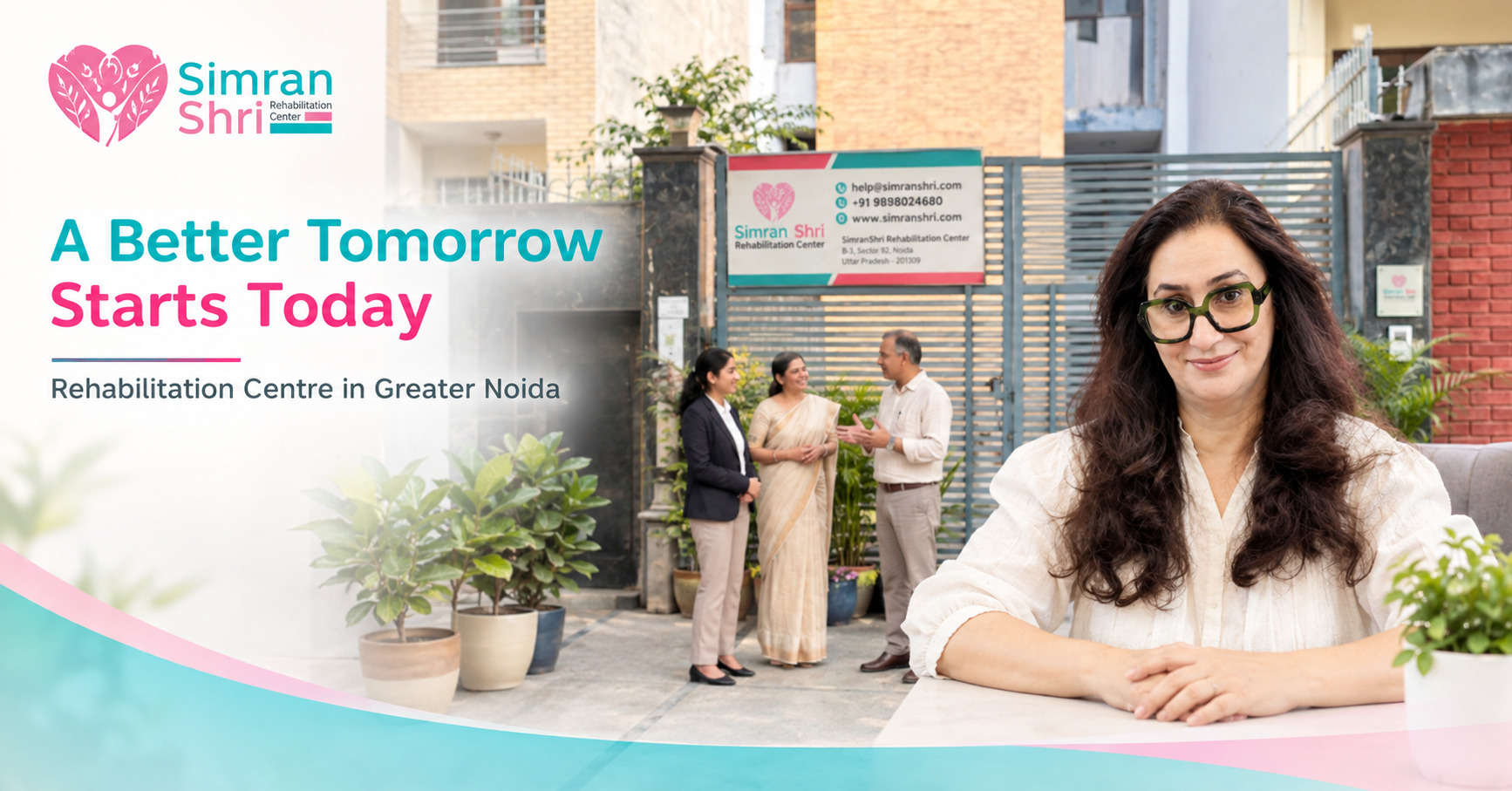
SimranShri Rehabilitation Centre is a government-approved centre located in Sector 92, Noida. Founded by Ms. Geeta Tewari, the centre reports eight years of experience and more than 30 years of combined staff experience. It also reports having supported over 2,000 families across North India.
The centre’s services include addiction counselling, detox and withdrawal management, family therapy, and relapse prevention support. Individuals and families should confirm the availability and suitability of specific services during admission enquiries.
Meet the Professionals Supporting Recovery
Recovery may involve several professionals, depending on a person’s clinical needs and treatment plan. Their roles can include psychiatric assessment, psychological support, counselling, and emotional wellbeing guidance.
The professionals associated with SimranShri Rehabilitation Centre include:
- Dr. Vikas Singhal — Psychiatrist: Psychiatric expertise can help assess mental health concerns and determine whether medical or psychiatric treatment is appropriate.
- Muskaan Trikah — RCI-Registered Clinical Psychologist: Clinical psychology may support psychological assessment and evidence-based therapeutic interventions within the professional’s scope of practice.
- Shreya Sarkar — Mental Health Professional and Holistic Wellness Practitioner: Her stated area of practice includes mental health support and holistic wellness.
- Mr. Vineet Sehgal — Senior Counselling Psychologist: Counselling psychology can help individuals address emotional challenges, coping skills, and recovery goals.
- Mr. Cyril John — Visiting Counsellor: Counselling support may help individuals discuss personal concerns and strengthen recovery strategies.
Professional involvement should be confirmed for each person’s treatment plan. Qualifications, clinical responsibilities, and the availability of individual practitioners can be verified directly with the centre.
Finding a Nasha Mukti Kendra Near Me for Continued Support
People searching for a Nasha Mukti Kendra Near me often need help understanding treatment options, admission procedures, and support after discharge. Location matters, but the quality and suitability of care are equally important.
When comparing centres, ask about personalised treatment plans, qualified professionals, confidentiality, family involvement, follow-up arrangements, and the process for responding to a relapse or medical concern.
For individuals and families in Noida, Greater Noida, Delhi NCR, and other parts of North India, SimranShri Rehabilitation Centre can be contacted to discuss its available services and admission process. Its admission enquiries are handled at +91 9958024680, and enquiries can be sent to help@simranshrirehab.com.
Frequently Asked Questions
1. How long should aftercare continue after rehabilitation?
There is no fixed duration for everyone. The appropriate length depends on individual progress, recovery needs, mental health, substance use history, and available support. The plan should be reviewed regularly with the relevant professionals.
2. Does relapse mean treatment has failed?
No. A return to substance use does not erase previous progress. It is a sign that the person may need prompt reassessment and changes to their support plan. A medical or mental health professional can help determine the next steps.
3. Can family members help prevent relapse?
Yes. Supportive communication, healthy boundaries, encouragement, and participation in suitable family sessions can help. Families should avoid blame and seek guidance when they are unsure how to respond.
4. What should an aftercare plan include?
Depending on individual needs, it may include counselling, follow-up appointments, trigger management, healthy routines, supportive contacts, family involvement, and a plan for seeking help during difficult periods.
5. How can I enquire about aftercare at SimranShri Rehabilitation Centre?
Contact the centre at +91 9958024680 or email help@simranshrirehab.com to ask about available services, follow-up arrangements, admission requirements, and fees.
Conclusion
Life after rehabilitation is a gradual process of applying new skills, managing challenges, and developing healthier routines. Relapse Prevention and Aftercare can help individuals stay connected to appropriate support, recognise warning signs, and respond to difficulties before they escalate.
With professional guidance, supportive relationships, and a personalised plan, recovery can become more manageable over time. SimranShri Rehabilitation Centre in Noida encourages individuals and families to ask informed questions and explore suitable support options for the next stage of recovery.
Recovery is not about achieving perfection. It is about taking constructive steps, seeking help when needed, and continuing to work towards a healthier life.