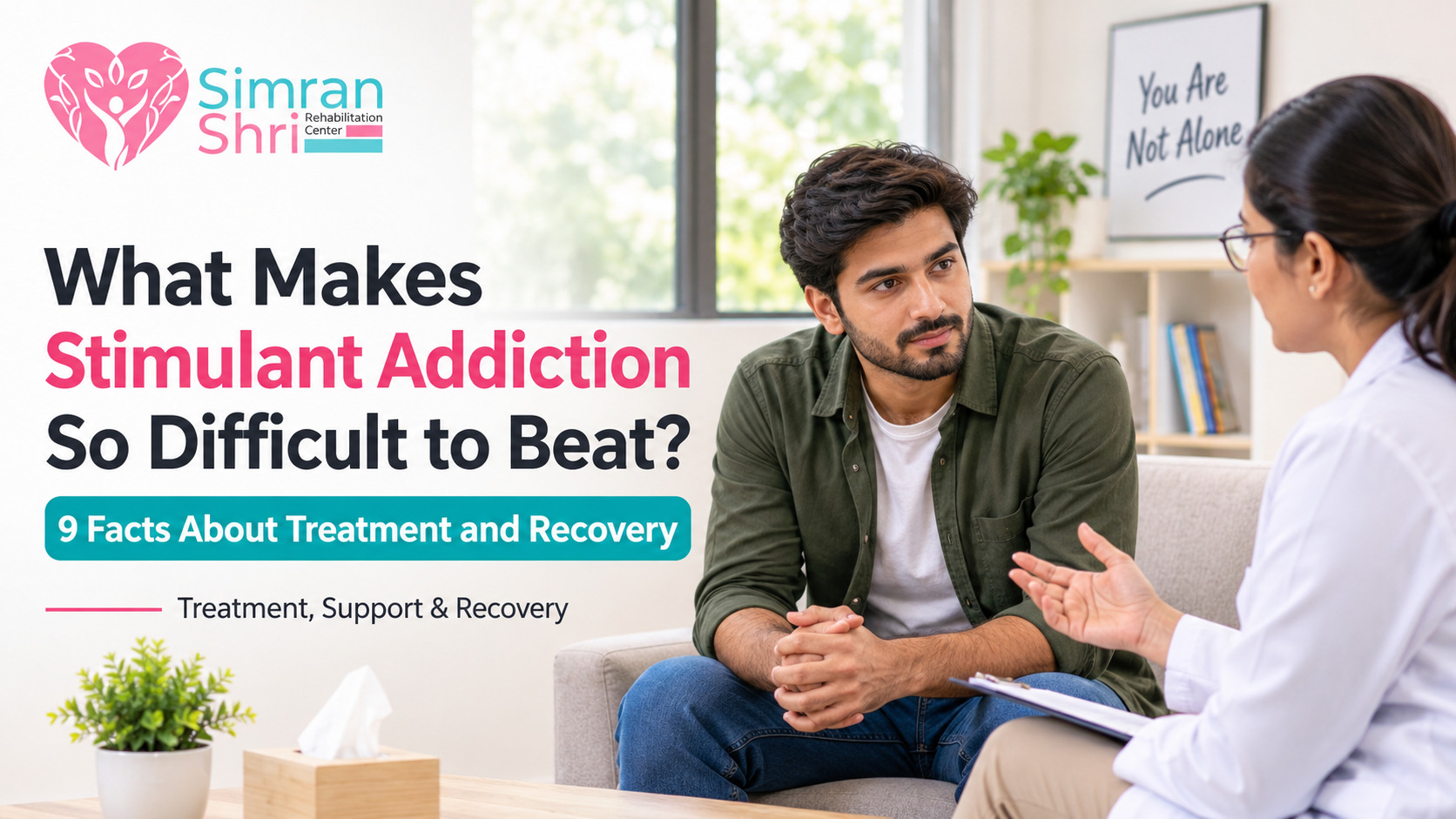
Stimulant addiction can affect a person’s physical health, mental well-being, relationships, and daily life. Substances such as cocaine, methamphetamine, and certain prescription stimulants can create strong feelings of energy and alertness. However, repeated use can gradually affect the brain and make it difficult to stop.
Many individuals want to quit but struggle with cravings, mood changes, sleep problems, and repeated patterns of substance use. This is why professional Stimulant Addiction Treatment is important for people who are finding it difficult to overcome dependence.
Recovery is not simply about stopping substance use. It also involves understanding the causes of addiction, improving mental health, developing healthier habits, and receiving continued support.
At SimranShri Rehabilitation Centre, individuals and families can explore professional addiction treatment and counselling support to understand their recovery options.
What Is Stimulant Addiction and Why Is It Difficult to Control?
Stimulants are substances that increase activity in the central nervous system. They can temporarily increase energy, alertness, and confidence. However, repeated use can affect the brain’s reward system and influence how a person experiences pleasure and motivation.
Common stimulants include:
- Cocaine.
- Methamphetamine.
- Amphetamine-based substances.
- Certain prescription stimulant medications when misused.
Over time, some individuals may develop tolerance, meaning they need more of the substance to experience similar effects. They may also experience strong cravings and difficulty controlling their use.
Professional Stimulant Addiction Treatment focuses on managing these challenges through medical assessment, psychological support, and structured recovery planning.
9 Important Facts About Stimulant Addiction Treatment and Recovery
Understanding addiction can help individuals and families make better treatment decisions. Here are nine important facts about stimulant dependence and recovery.
1. Addiction Can Change Brain Function
Repeated stimulant use can affect the brain’s reward, motivation, and decision-making systems. This may make everyday activities feel less enjoyable and increase the desire to use substances.
Treatment helps individuals understand these changes and work towards healthier patterns through professional support.
2. Cravings Can Continue After Stopping Substance Use
Stopping stimulant use does not always mean cravings disappear immediately. Certain situations, emotions, people, or places may trigger the desire to use again.
Counselling and behavioural therapies can help individuals identify these triggers and develop practical ways to manage them.
3. Mental Health Support Is an Important Part of Recovery
Stimulant use may be associated with anxiety, depression, sleep disturbances, irritability, and other mental health concerns.
A psychiatrist or qualified mental health professional can assess these difficulties and recommend appropriate care.
4. Polysubstance Abuse Treatment May Be Necessary
Some individuals use stimulants along with alcohol, cannabis, opioids, or other substances. This is known as polysubstance use.
Polysubstance Abuse Treatment requires careful assessment because different substances can create different health risks and withdrawal symptoms.
Treatment should consider every substance involved rather than focusing on only one addiction.
5. Marijuana Addiction May Require Professional Support
Although some people consider marijuana harmless, regular use can lead to dependence in certain individuals. It may affect memory, concentration, motivation, and daily responsibilities.
Marijuana Addiction Treatment can include psychological assessment, counselling, behavioural support, and relapse prevention planning.
6. Heroin Dependence Needs Specialised Medical Attention
Heroin is an opioid that can cause serious physical dependence and overdose risks. Stopping heroin can produce uncomfortable withdrawal symptoms and may require medically supervised treatment.
Heroin Addiction Treatment should be based on an individual medical assessment. Evidence-based treatment may include medication for opioid use disorder, counselling, and continued recovery support.
7. Family Support Can Improve the Recovery Process
Addiction often affects parents, spouses, children, and other family members. Families may experience stress, confusion, and emotional difficulties.
Family therapy can help improve communication, establish healthy boundaries, and create a supportive environment during recovery.
8. Recovery Requires More Than Detoxification
Detoxification may help manage the immediate physical effects of stopping substance use. However, it does not address every psychological or behavioural aspect of addiction.
Long-term recovery may involve counselling, psychiatric care, lifestyle changes, family involvement, and regular follow-up.
9. Relapse Prevention Is an Important Part of Treatment
Recovery is a continuous process. Stress, emotional difficulties, social situations, and exposure to previous triggers can increase the risk of returning to substance use.
A professional treatment plan should include practical relapse prevention strategies and continued support.
What Happens During Stimulant Addiction Treatment?
A structured Stimulant Addiction Treatment programme generally involves several stages. The exact approach depends on the person’s health, substance use history, and treatment requirements.
Initial Medical and Psychological Assessment
The first step is understanding the individual’s physical and mental health. Professionals may review substance use patterns, previous treatment history, sleep, emotional health, and other medical concerns.
Withdrawal Management and Stabilisation
Some individuals experience fatigue, sleep changes, low mood, increased appetite, anxiety, and strong cravings after stopping stimulants.
Medical professionals can assess these symptoms and recommend appropriate care. Severe depression, suicidal thoughts, paranoia, or other serious symptoms require urgent professional attention.
Counselling and Behavioural Therapy
Psychological support helps individuals understand their addiction patterns and develop healthier ways to manage difficult emotions.
Depending on individual needs, treatment may include cognitive behavioural therapy, motivational approaches, and other evidence-based interventions.
Continued Recovery and Aftercare
After the initial treatment period, continued counselling and follow-up support can help individuals maintain progress and manage challenging situations.
Meet the Professional Team at SimranShri Rehabilitation Centre
Professional knowledge and mental health support are important parts of addiction recovery.
At SimranShri Rehabilitation Centre, the professional team includes:
- Dr. Vikas Singhal (Psychiatrist): Provides psychiatric expertise and guidance for mental health assessment and treatment.
- Muskaan Trikah (RCI Registered Clinical Psychologist): Brings clinical psychology expertise to psychological assessment and counselling.
- Shreya Sarkar (Mental Health Professional and Holistic Wellness Practitioner): Supports mental well-being through a holistic approach.
- Mr. Vineet Sehgal (Senior Counselling Psychologist): Contributes counselling expertise and emotional support.
- Mr. Cyril John (Visiting Counsellor): Provides additional counselling support.
The involvement of different mental health professionals helps address the emotional and psychological challenges that may arise during addiction recovery.
Why Consider SimranShri Rehabilitation Centre for Addiction Treatment?
Families looking for a reliable Nasha Mukti Kendra or professional rehabilitation support should consider the experience, treatment approach, staff qualifications, and admission process of a centre.
SimranShri Rehabilitation Centre is a government-approved centre founded by Ms. Geeta Tewari. Located at A-46, Block A, Sector 92, Noida, Uttar Pradesh 201304, the centre has eight years of experience in rehabilitation services.
The centre has supported more than 2,000 families across North India, with experienced staff having over 30 years of combined experience.
Its treatment and support services include:
- Alcohol Addiction Treatment.
- Drug Addiction Treatment.
- Cocaine Addiction Treatment.
- Detox and Withdrawal Management.
- De-Addiction Counselling.
- Family Therapy.
- Relapse Prevention and Aftercare.
The admission process is confidential. Families can contact the centre to understand the available services, treatment suitability, and admission requirements.
For more information, visit:
- Fees and Treatment Costs: https://simranshrirehab.com/cost-of-rehab-india/
- Admission Process and Qualifications: https://simranshrirehab.com/admission-process/
- Centre Directions: https://share.google/iNZvRIosaY8Xi3uau
The centre also maintains a focus on hygiene, safety, and responsible facility management. Families should ask about applicable healthcare safety standards, sanitation practices, and biomedical waste management arrangements when evaluating a rehabilitation facility.
When Should Someone Seek Professional Help?
It may be time to seek professional help when substance use starts affecting everyday life.
Some warning signs include:
- Repeated unsuccessful attempts to stop using stimulants.
- Strong cravings or loss of control.
- Changes in sleep, mood, or behaviour.
- Neglecting work, education, or family responsibilities.
- Continuing substance use despite health problems.
- Experiencing anxiety, depression, or other psychological difficulties.
Early assessment can help identify the level of care required. If someone experiences chest pain, seizures, severe confusion, or suicidal thoughts, seek emergency medical assistance immediately.
Conclusion: Recovery Begins With the Right Support
Stimulant addiction can be difficult to overcome, but professional help can make the recovery process more manageable. Medical assessment, psychological counselling, family involvement, and continued aftercare all play important roles.
Choosing the right Stimulant Addiction Treatment approach depends on the individual’s health, substance use history, and personal recovery needs.
SimranShri Rehabilitation Centre, founded by Ms. Geeta Tewari, provides addiction treatment and rehabilitation support to families across North India from its Noida facility. With experienced staff and a confidential admission process, the centre helps families understand available treatment options.
If you or someone close to you is struggling with substance use, seeking professional guidance can be a positive first step towards recovery.
For Admission Enquiries: +91 9958024680
Email: help@simranshrirehab.com
Address: A-46, Block A, Sector 92, Noida, Uttar Pradesh 201304
Frequently Asked Questions (FAQs)
1. What is Stimulant Addiction Treatment?
Stimulant Addiction Treatment is a professional approach to helping individuals overcome dependence on substances such as cocaine and methamphetamine. It may include medical assessment, behavioural therapy, counselling, mental health support, and relapse prevention.
2. Can stimulant addiction be treated successfully?
Yes. Many people make meaningful progress with appropriate treatment and continued support. Recovery varies between individuals and may require ongoing counselling and follow-up care.
3. What is the difference between stimulant addiction and polysubstance addiction?
Stimulant addiction involves dependence on substances that increase central nervous system activity. Polysubstance addiction involves the use or dependence on multiple substances, such as stimulants, alcohol, cannabis, or opioids.
4. Is Marijuana Addiction Treatment different from Heroin Addiction Treatment?
Yes. Marijuana and heroin affect the brain and body differently. Marijuana treatment often focuses on behavioural and psychological support, while heroin treatment may require medically supervised withdrawal management and evidence-based opioid treatment medications.
5. Does SimranShri Rehabilitation Centre offer confidential admission?
Yes. SimranShri Rehabilitation Centre follows a confidential admission process. Families can call +91 9958024680 to discuss treatment options, admission requirements, and available services.