Addiction does not affect only the person struggling with substance use. It can gradually change relationships, disturb family routines, create emotional distance, and weaken the trust between loved ones. Family members may experience frustration, fear, disappointment, and confusion while trying to understand what is happening.
In many households, repeated arguments, broken promises, financial difficulties, and concerns about relapse can make relationships increasingly difficult. Even when someone begins addiction treatment, rebuilding family relationships may take time.
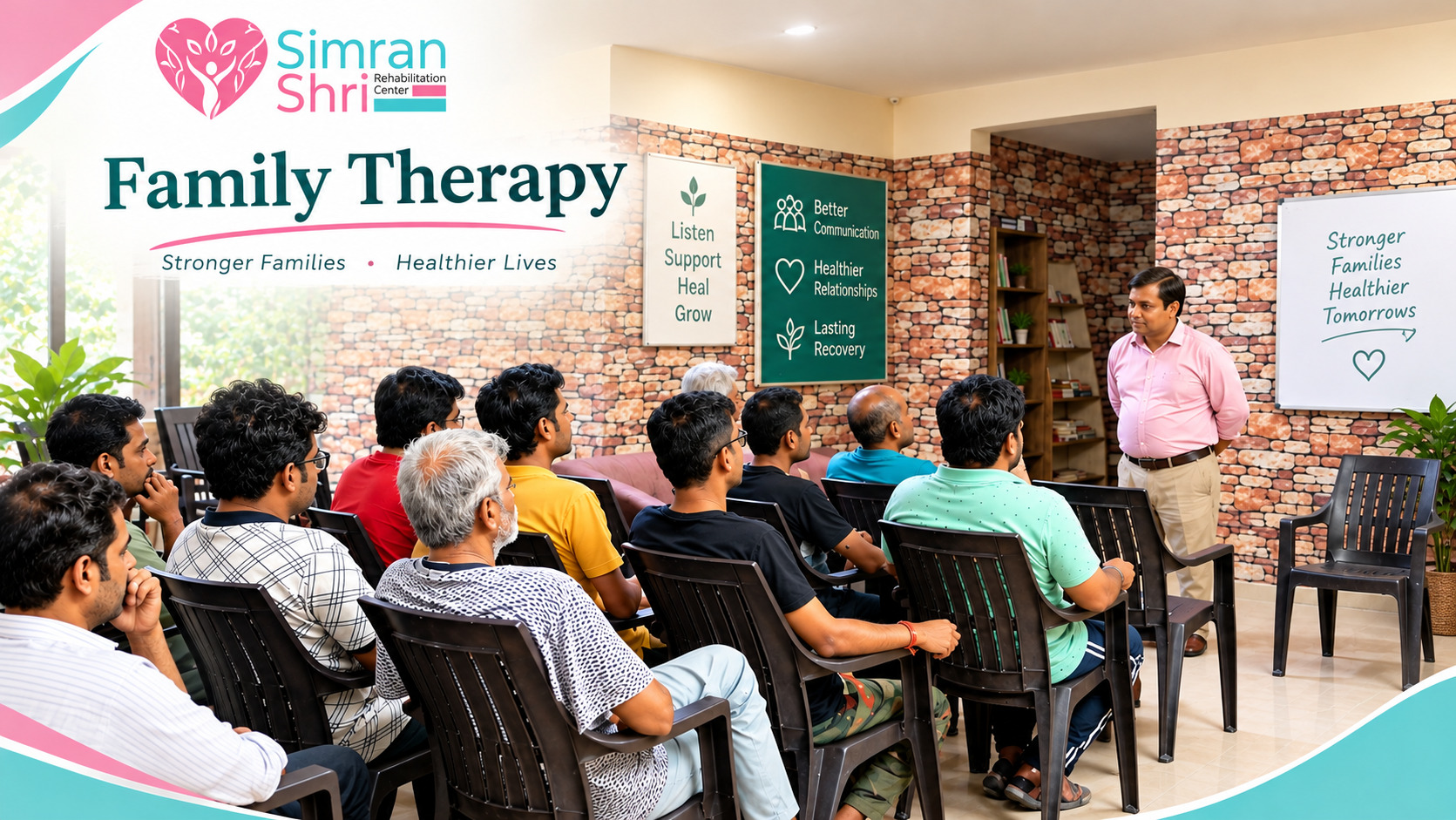
This is where Family Therapy becomes an important part of the recovery process. It gives individuals and their loved ones a structured space to understand addiction, improve communication, address emotional concerns, and work towards healthier relationships.
At SimranShri Rehabilitation Centre, Noida, family involvement is considered an important part of the recovery journey. With professional counselling, psychological support, and appropriate therapeutic guidance, families can gradually learn how to support recovery while maintaining healthy personal boundaries.
How Addiction Gradually Damages Family Relationships
Addiction often changes everyday behaviour and family interactions. A person may become emotionally distant, avoid conversations, hide substance use, or struggle to fulfil personal responsibilities.
Over time, family members may find themselves constantly worried about the person’s safety and future.
Some common relationship challenges include:
- Loss of trust: Repeated dishonesty or broken promises can make family members question what they hear.
- Communication problems: Conversations may turn into arguments, blame, or emotional silence.
- Emotional stress: Parents, spouses, and children may experience continuous worry and uncertainty.
- Financial pressure: Substance-related expenses can affect household finances and responsibilities.
- Social isolation: Families may avoid social gatherings because of embarrassment or fear of judgement.
These difficulties do not necessarily mean that relationships cannot improve. With appropriate treatment and consistent effort, families can begin rebuilding healthier connections.
Why Family Therapy Matters During Addiction Recovery
Family Therapy focuses on understanding how addiction affects relationships and how family members can contribute positively to recovery.
Instead of blaming one person, the therapeutic process encourages everyone involved to understand their roles, communication patterns, and emotional responses.
It can help families:
- Understand addiction as a complex health condition.
- Recognise unhealthy communication patterns.
- Express concerns without constant arguments.
- Establish realistic expectations during recovery.
- Develop healthier ways of handling conflict.
- Learn how to recognise situations that may increase relapse risks.
Family involvement should always be appropriate to the individual’s treatment plan. It should also respect privacy, consent, and emotional safety.
Different Therapeutic Approaches That Support Family Healing
Every family has different experiences and concerns. Therefore, treatment approaches should be selected according to individual needs rather than following the same method for everyone.
1. Addiction Therapy for Better Understanding
Addiction therapy helps individuals understand the emotional, behavioural, and environmental factors associated with substance use.
Family members can also learn about addiction-related behaviour, recovery challenges, and the importance of consistent support.
This understanding can reduce unnecessary blame and encourage more constructive conversations.
2. CBT Therapy for Changing Unhealthy Patterns
CBT Therapy, or Cognitive Behavioural Therapy, helps individuals identify connections between thoughts, emotions, and behaviours.
For example, a person experiencing stress may develop negative thinking patterns that increase the urge to use substances.
Through CBT-based techniques, individuals can learn to:
- Identify unhealthy thought patterns.
- Recognise emotional triggers.
- Develop practical coping strategies.
- Manage stressful situations.
- Build healthier daily habits.
When appropriate, these skills can also help improve communication within family relationships.
3. Couple Counselling for Rebuilding Emotional Connections
Substance use can create significant emotional distance between partners. One partner may feel ignored or betrayed, while the other may struggle with guilt, shame, or difficulty expressing emotions.
Couple counselling provides a guided environment where partners can discuss relationship concerns without turning every conversation into an argument.
It may help couples work on:
- Rebuilding emotional understanding.
- Improving communication.
- Establishing healthy boundaries.
- Addressing unresolved disagreements.
- Developing realistic expectations.
However, joint counselling may not be suitable in situations involving intimidation, abuse, or safety concerns. Individual support and safety planning should take priority.
4. Psychiatrist Therapy and Professional Assessment
A Psychiatrist Therapy can assess mental health concerns that may occur alongside addiction, including anxiety, depression, sleep disturbances, and other psychological difficulties.
Psychiatrist-led treatment may involve clinical evaluation, medication management when required, and coordination with other mental health professionals.
This support is particularly important when a person needs integrated care for both substance use and co-existing mental health concerns.
5. Trauma Therapy for Addressing Emotional Pain
Some individuals have experienced difficult life events, emotional neglect, abuse, or other traumatic experiences.
Unresolved trauma can affect emotional regulation, relationships, and coping behaviour.
Trauma-informed care focuses on creating a safe and supportive environment where individuals can address these experiences at an appropriate pace.
The objective is not to force someone to discuss painful memories but to provide professional support that respects their emotional readiness.
Meet the Mental Health Professionals Supporting Recovery
Professional guidance plays an important role in addiction treatment and family support. Different specialists contribute according to their qualifications and areas of practice.
At SimranShri Rehabilitation Centre, the professional team includes:
- Dr. Vikas Singhal – Psychiatrist: Provides psychiatric assessment and clinical guidance for mental health concerns associated with addiction.
- Muskaan Trikah – RCI Registered Clinical Psychologist: Supports psychological assessment and evidence-based psychological interventions within her professional scope.
- Shreya Sarkar – Mental Health Professional and Holistic Wellness Practitioner: Supports emotional wellbeing and holistic wellness.
- Mr. Vineet Sehgal – Senior Counselling Psychologist: Provides counselling support for emotional and behavioural concerns.
- Mr. Cyril John – Visiting Counsellor: Contributes counselling support as part of the centre’s professional services.
The involvement of different professionals allows treatment needs to be considered from multiple perspectives. Specific therapies and clinical interventions depend on individual assessment and professional suitability.
How Families Can Rebuild Trust During Recovery
Rebuilding trust is rarely an overnight process. It requires patience, consistent behaviour, honest communication, and realistic expectations.
Here are some practical ways families can contribute:
Listen before reacting: Allow the person to express their concerns without immediately responding with criticism.
Set healthy boundaries: Supporting recovery does not mean accepting harmful behaviour. Families should communicate clear and reasonable expectations.
Avoid constant reminders of past mistakes: Previous experiences may need to be addressed, but repeatedly using them during arguments can make communication more difficult.
Recognise small improvements: Positive changes in routine, responsibility, and communication deserve encouragement.
Participate in counselling: Professional guidance can help family members understand how to support recovery without neglecting their own emotional wellbeing.
Stay consistent: Recovery involves progress as well as challenges. Consistent support and appropriate treatment planning are important.
Family Support at SimranShri Rehabilitation Centre, Noida
Choosing a rehabilitation facility involves understanding its treatment approach, professional support, admission process, and available services.
SimranShri Rehabilitation Centre is a government-approved centre founded by Ms. Geeta Tewari, with eight years of experience in rehabilitation services. The centre reports having supported more than 2,000 families across North India.
Its experienced staff bring over 30 years of combined experience.
The centre offers services including alcohol addiction treatment, drug addiction treatment, detox and withdrawal management, de-addiction counselling, family therapy, and relapse prevention and aftercare.
Family involvement is approached as part of the wider recovery process, helping loved ones understand addiction and develop healthier ways to communicate.
Admissions are handled confidentially, and families can discuss treatment requirements before making a decision.
For families in Noida, Greater Noida, Delhi NCR, and other parts of North India, professional guidance can help clarify the available treatment options.
Conclusion: Rebuilding Trust Begins With Understanding
Addiction can create emotional distance, damage relationships, and leave families feeling helpless. However, these experiences do not have to define the future of a family.
Family Therapy provides an opportunity to understand addiction, address communication problems, and develop healthier relationships. Combined with appropriate addiction treatment, psychological support, and consistent aftercare, it can help individuals and families work towards a more stable future.
At SimranShri Rehabilitation Centre, the focus is on supporting individuals and families through professional guidance and structured recovery services.
Asking for help is not a sign of weakness. It can be the first meaningful step towards rebuilding trust and moving forward together.
Frequently Asked Questions (FAQs)
1. What is Family Therapy in addiction treatment?
Family Therapy is a structured counselling approach that helps individuals and their family members understand addiction-related challenges, improve communication, resolve relationship concerns, and develop healthier support systems.
2. Can Family Therapy help rebuild trust after addiction?
Yes. It can help family members discuss unresolved concerns, establish boundaries, improve communication, and gradually rebuild trust through consistent actions and mutual understanding.
3. Is CBT Therapy useful for people recovering from addiction?
CBT Therapy can help individuals recognise negative thought patterns, understand emotional triggers, develop coping strategies, and manage behaviours associated with substance use.
4. What is the difference between Couple Counselling and Family Therapy?
Couple counselling mainly focuses on relationship concerns between partners, while Family Therapy may involve parents, spouses, siblings, or other family members affected by addiction.
5. Where can families seek addiction counselling in Noida?
Families can contact SimranShri Rehabilitation Centre, located at A-46, Block A, Sector 92, Noida, Uttar Pradesh 201304, to discuss available addiction treatment and family counselling services.